SVB’s UK branch was sold…for £1.
EDIT:
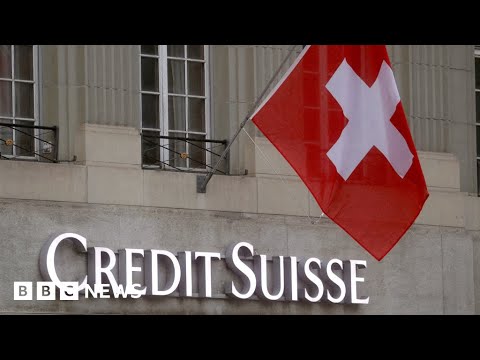
A little color on the CS situation.
As someone who understands financial systems at maybe a 200’ish level (using the College course 101, 201, 301, 401 paradigm) one thing that I’m confused by is why the rising of interest rates is resulting in banks being in trouble. The way I’ve heard it described is that higher interest rates make it more attractive for people to put their money into banks in order to get a guaranteed rate of return which takes money out of the circulation which moderates inflationary demand.
Yet these banks have previously been investing their deposited money in bonds and now those bonds are not going to return as much on the investment… so depositors are concerned the bank will run out of money in the future so they take their money out of the bank today to ensure they can get their money which causes the bank to sell more of the bonds at a loss (or less of a gain than forecasted) which makes other depositors anxious and the negative feedback loop is off to the races.
What am I missing here?
The interest rate that goes up is the federal reserve interest rate. This means if a bank wants to get a loan from the government, it has to pay the government back the loan plus that interest rate.
When interest rates are low, banks can get free money basically. They can then use that money to invest in all sorts of things. Usually that means loaning it to other people in the form of mortgages or business loans. Those bank customers have to pay the bank interest on those loans. The interest rate the bank gives them is higher than the interest rate the government asks for, and sot he bank makes money on the difference.
If the federal reserve interest rate is high, then theoretically a bank should offer customers a better interest rate on things like savings accounts, CDs, and other products. As long as the interest rate they offer to savers is lower than the fed rate, they can effectively borrow from customers more cheaply than they can borrow from the government.
But do people actually run out to the bank to save tons of money when this happens? The current fed rate is 4.58%. What’s the bank going to offer on a savings account? Even 3% is generous. Does 3% make you want to rush out and fill up a savings account with cash? Not really.
And are banks actually offering that? No! Chase bank is offering 0.02% on savings accounts right now.
And even if people did fill up their savings accounts for 3%, OK. The bank still has to find ways to invest that money and get a return higher than 3%. They have to give someone a mortgage or a business loan with a high rate. When rates are high, people don’t like getting mortgages. They wait.
That’s sort of the whole point of raising rates. You stop people from spending so much money on things, and decrease economic activity, to hold back inflation.
A healthy bank at any given time needs money coming in, not so much money going out all at once, and a good way to invest the money it has sitting around. If the total value of the bank’s assets fall below the total deposits on all the customer accounts, then it’s in trouble. You want to make a lot of successful investments and build up a huge buffer of extra cash.
Even if every single customer closes their accounts, and withdraws everything. Even if a bank pays back all its debts to the federal reserve. A healthy bank should still just have tons of assets left in the form of cash, investments, and also constant incoming cash from payments on loans they’ve given to people. If the value of investments goes down, rates go up, and/or customers withdraw all at once, an unhealthy bank is in trouble.
So the issue isn’t just the amount of cash on hand that the banks have, but also looking at their balance sheets and asset lists and they are either too close to the line or over it on not having enough to cover all of their deposits and that is, understandably, scaring depositors and they try and get their money out first?
Aren’t there regulations that banks are required to be above a certain threshold (ideally more cash + assets than deposit obligations)? If the current regulations do not require that the banks have more than they owe to their depositors, WTF!? That sure seems like the first thing that a bank needs to be required to do.
*Edit: I get fractional reserve banking as it relates to cash on hand. But I’m shocked if they don’t have to have access to more money than they owe their depositors, given time to liquidate investments and such.
No, of course not. You can’t run a bank like that.
Let’s say I start a brand new bank. You are my first customer and deposit $1000.
Ok, so I put the $1000 in the safe and I can’t touch it, because I have to have enough cash to cover the deposit.
Now someone comes in and asks for a mortgage. Exactly what money am I supposed to lend them?
What money do I use to pay my employees?
What money do I use to pay for the electric bill at the bank?
Where can I get more money? I can get loans from the federal reserve, but I have to pay those back with interest. Interest rates are high. That means if I borrow that money from the fed I have to really make a huge return on it, otherwise I lose money and I’m in the shit.
I can sell shares in my bank to investors. Ok, but once those shares are sold, they’re sold. That’s only going to work as long as I have more shares to sell to investors. Just like any other business.
Ok, so let’s say a bank found a good way to invest money it borrows from the fed and get a return that beats the interest rate, that’s great. Let’s say the bank also has a way to use the investor’s money to get a good return, that’s also great.
If the bank can do those two things, why exactly would it even offer checking accounts and take deposits? Providing those services costs the bank money. It has to make that money back, plus some. If the deposits just have to sit there untouched, the only way the bank could make money from those customers is to charge them horrendous fees. Obviously nobody is going to be a customer of a bank like that. They would be better off putting their money in a buried treasure chest.
A bank is only going to take deposits if it can make money off of them. That means it has to be able to invest them. What’s important is that they have a safe percentage of assets that are liquid. Also, the assets that aren’t liquid need to be able to be sold quickly and have enough value to cover the deposits.
This is kinda both true and false, depending on how you count things. It’s more or less what caused the issue with Silly Valley Bank.
SVB got a lot of money from depositors. So they bought some US treasury bonds (super safe investment!) with that deposit money.
Nothing about those bonds has changed. They provide some fixed interest payment every month, and at maturity in 10 years or whatever, they will pay out the same number of dollars it says on the paper. But they were purchased, say, a year ago, and have low interest rates relative to today. I’m reading something like ~1%, compared with rates today north of 4.5%.
If you needed a lot of cash today (bank run), you might sell those bonds. But prospective buyers have better options today than when you bought them from the government. So if you’re going to sell them today, you have to offer a discount. That’s the sense in which the bonds have “lost value”.
So if you count them as “just going to keep holding them”, everything is fine. If you need to count them as today’s market price, you take a loss.
And people noticed, “hey, SVB has a big loss here, they don’t have enough assets to cover their liabilities”, and then a bank run happened.
My info on this comes from Matt Levine, a writer for Bloomberg. If you want more details, he writes in a pretty accessible manner for non-wall-street types, and the last few days’ worth of columns are pretty good.
Fine, but then what changed (with SVB, Credit Suisse) or what is changing that is causing all the concern then? If it is normal for banks to be relying on their investments to payoff over the medium to long term, then I guess I’m still confused why the sudden concern about banking health, especially more broadly? If it is just about the impact that rising bond interest rates has on the previous expectations of return on investment, how is this:
Yes, it is easy in hindsight to say banks shouldn’t have been investing so much in bonds if this is a potential risk. But did these (and maybe other) banks do something illegal or just unwise? I’ve seen references to some banking deregulation in 2018 that made it so banks had less scrutiny if they had a smaller total asset pool and SVB was just under that new, higher, limit. But what would they have been required to do differently if they were subject to the extra scrutiny years ago?
Or, is this caused (maybe not wholly, but to a large degree) by the rapid spread of panic and mass action that is enabled by social media and instant worldwide communication - similar to the toilet paper availability issues of the spring/summer 2020? I’ve heard a lot of blame cast towards Peter Thiel and that circle of silicon valley assholes for pushing the snowball down the hill, so to speak. Maybe the Credit Suisse situation is still part of the fallout of SVB failing and otherwise would not be of concern at this moment?
There’s no one thing to blame. All these things happened at once.
What’s happening now, and has been happening to the rest of wall street for a little while now, is that investors are actually asking companies if they are profitable. In uncertain times people want to invest in companies that are actually strong. Interest rates, war, inflation, pandemics, etc. make investors want to put their money in things that they believe will survive bad times. The appetite for gambling on a little startup to become the next Google is gone. Now is the time for Googles of the world to lay people off to get their accounting in the black.
Due to the SVB incident, the eye of Sauron is now upon the banking sector. Everyone in finance is looking over the financials of every bank to see which ones are strong, and which ones are unstable ground. If any of them are found wanting, investors and depositors are going to hold back. And if the people who thought they weren’t strong were correct, that could take some of them down, or at least put a hurt on them.
If on the other hand, people pull out of a bank that was just fine, that actually presents a great opportunity for investors to buy low.
Credit Suisse has had a lot of dramas in recent history. Things like getting in trouble for not doing enough to fight money laundering, and other things. Their largest investor is the Saudi National Bank. They just announced they aren’t going to invest any more in Credit Suisse. The lack of confidence made a whole bunch of people sell Credit Suisse stock, and it dropped 25%. The bank hasn’t failed, it’s just doing poorly, as a company.
Yeah, that’s an interesting angle on all this concern over banks. They are places where people have placed their money in the expectation of it being available to them when they need it in the future. And the bank is in the business of turning that trust into return on investment successfully enough that others will want to own shares of stock in the bank with the hope that others will be willing to pay more for those shares in the future. So if confidence falters in the success of the investment business the bank is doing that makes stock market investors want to divest which can make the people whose money is in the bank concerned about being able to get their money out which can cause more people to take their money out causing the bank to be even less attractive to both investors and other depositors.
If a corporation isn’t doing so hot and investors sell and the stock price drops, that does not inherently cause the corporation to be less able to conduct its business. Maybe they will have a harder time gaining new customers or upselling existing customers because they have concerns about its future. But the entire customer base cannot come in and take away all of their previous funds they gave to the corporation which were required for the corporation to exist.
There’s no avoiding this scenario in capitalism.
If everyone keeps their money in their mattress, the economy grinds to a halt. Banks are essential to a functioning society.
At some point everyone has to exchange money for various financial instruments. They have wildly varying amounts of risk, but none have zero risk. Not even having a vault full of various currencies and precious metals has no risk.
The only solution I know of is to have a government bank. The popular idea right now in the US is for it to be a postal bank, which is convenient since the post office already has retail locations everywhere. It also already performs some bank-adjacent services, like selling money orders.
The idea here is that a bank run by the government doesn’t need to make money. All the employees and services it provides could be funded by taxes. A government run bank could just keep everyone’s money in cash at all times.
Of course, even if we did create such a bank, it probably wouldn’t do that. That would be foolish. It would invest the money in various ways just like other banks. For example, we almost definitely want this bank to offer mortgages to citizens. But since it’s a government bank it has no shareholders and the profit motive is outweighed by the motive of public service. It could also guarantee all deposits 100%, since it’s literally the government.
The only problem is that even then, there’s still risk. The bank only stands as long as the government of that country stands. Throughout history plenty of countries have failed and plenty of national banks have failed.
Whatever you do with your money, even if you do absolutely nothing but hoard it, you’re making a bet, and you can always lose that bet.
I personally choose to place my bet on “continued functioning of society and continued dominance of US capitalism.” The way I see it, the bet is likely to succeed for the rest of my life, even if may not want it to. If it does pan out, I’ll be in good financial shape. If it doesn’t pan out, either I’ll be ok because socialism, or I won’t care about my finances because money will no longer have meaning in a failed society.
The fun part of this is that we did this previously.
Scott’s pretty accurate about the broad strokes of all this. Which is saving me a lot of typing.
The health of banking was dependent on some economic conditions that have changed rapidly and radically. In this case, a big factor is simply that an entire industry went from a situation where new money was constantly pouring in (from investors investing in tech companies) to a situation where nobody was ever depositing anything and all existing customers were just withdrawing at a steady (or even accelerating) rate.
Even this was probably fine for SVB. They were taking actions to raise capital to keep their balance sheet in order despite this. What happened (roughly) was the investors in the bank getting spooked and bailing, driving the value of the shares down and bringing widespread attention to the situation, which became a feedback loop.
Other banks fell (in my personal and not, formally, my professional opinion in this case) mostly due to the halo effect of increased scrutiny and fear, coupled with bank investors noticing that the feds only bailed out the depositors and left the investors holding the bag. That one crypto bank fell because crypto is fake.
Investors expect new regulation to come to banking, which will likely reduce profits. (This is a good thing for humanity, but a bad thing for the capitalist investor class). That’s also putting downward pressure on banks.
Banks themselves were doing shady things (broadly) due to the lack of modernized banking regulation, in the service of maximizing profit for their investors. They could have played a lot safer, still paid all their employees, still provided all these services, and their investors would have made slightly less money.
This of course angers Capitalism.
How could we have prevented this? By voting for Clinton in 2016, and/or by having elected a few more Democratic senators and passing the reforms that Elizabeth Warren has been yelling about forever.
UBS Group AG will buy Credit Suisse for more than $2 billion in an all stock deal.
Google says Credit Suisse market cap is $7 billion. Shed another 70% since Friday?
I never thought of it like this before, but it’s a nice feature of the banking system to have like 60 straight hours of downtime every week.
Matt Levine today:
there is a payment, in stock, of one UBS share for every 22.48 Credit Suisse shares. UBS closed on Friday at CHF 17.11 per share, making the deal worth about CHF 0.76 per Credit Suisse share, or about CHF 3 billion total, down about 60% from Friday’s close.
So yeah, more or less.
STOCK Act showing signs of life a decade later!
https://www.cnn.com/2023/07/19/politics/stock-ban-senate-bill/index.html
The legislation will also ban blind trusts
Hopefully this one doesn’t get gutted too.
So the BBBY saga’s ended for now; the stock’s getting disolved, and /r/bbby is all out of cope for now. There was some lore to these guys, for sure, but it’s sad that there are some people so far down the rabbit hole that “Gamestop, Bed Bath and Beyond, and AMC movie theaters are going to take over the American economy and replace all businesses” was considered a reasonable opinion among them.
Dan Olson returns with a new video on that wacky GameStop short squeeze.

Same day, two news stories.
The combined story is that people had money saved from the dark times. Not traveling, not going to events, etc. They also had a long period of student loan forgiveness. In more recent times people spent that money, which boosted the economy.
Some economists think that money has run out, or will run out soon. People will stop spending so much, and that will put on the squeeze.
We shall see.
Usual warning that I’m not a financial expert. This isn’t financial advice. If you make decisions with your money based on the things I say, and you go broke, you have only yourself to blame.
The expectation of the financial world is that the evil regime about to take over the US is going to lower taxes, but they have no plans to cut spending. Of course what the government spends on will change, but that’s besides the point. Along with supposed tariffs this will worsen inflation. Ironic that so many fools voted for the evil team in hopes they would bring down high prices.
This is a big deal in the bond market. When you buy a government bond, you are giving the US government a loan at a particular interest rate. When you consider who is running the show, with low taxes and high spending, you are less confident lending the government money. Bonds are now considered riskier than when the government is stable and well managed. This means that bond yields have to be higher. They need to entice harder to get people to buy them. Just like how interest rates on loans are high for people with bad credit, bond yields are high for governments with bad credit.
You would think oh, this is great! I can buy a new government bond with a higher interest rate and make more money. That’s true if you’re going to accept the increased risk. If the US fails, your money could be gone.
It’s also bad news for financiers in the bond market. They have old bonds they are trying to sell. It’s now harder for them to sell those bonds. Why would you buy their old bonds when newer ones have higher yields? They can’t change the rates of old bonds, so they have to lower their prices. This means the bond market is down.
Meanwhile the stock market is up, a lot. If they’re going to lower taxes, companies have more money. More money to do things like stock buybacks and dividends. If the government spending isn’t going down, and it’s not being spent on social services, what is it being spent on? It’s being spent on contracts with all sorts of private companies. The government is going to print a bunch of money and give it to the wealthy.
Not advice, but I plan to keep doing what I’ve been doing. I will keep buying I-bonds to protect against inflation, since I expect the rates to go up. I will keep investing in index funds to claw some of the money back from the evil corps as the stock market rises. If either one fails, and I lose everything, that’s just fine with me. Money won’t do me any good in that world.